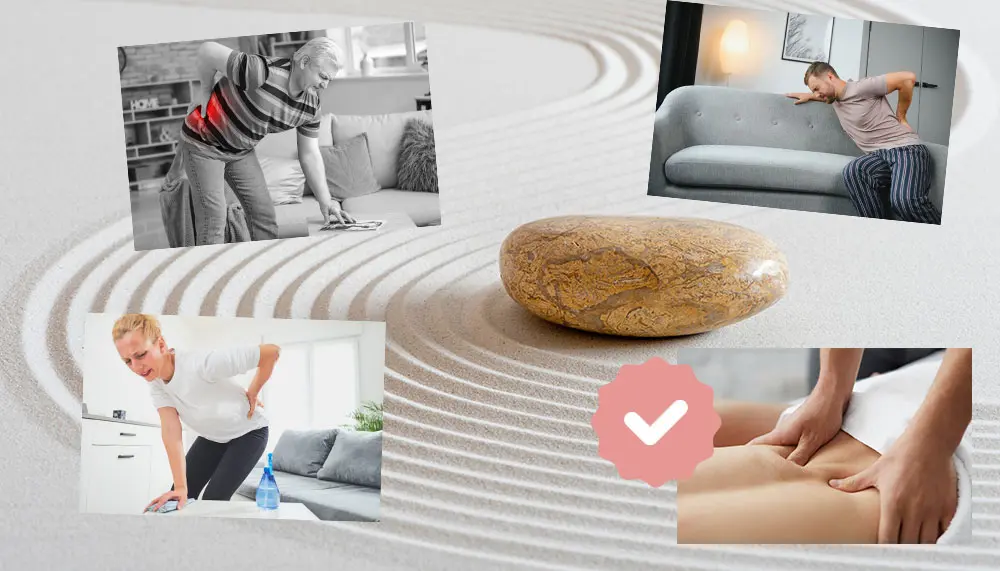
Caring for Your Back at Home
When we talk about lumbago, we’re referring to the pain felt in the lower part of your back. It can also involve stiffness in your back, reduced lower back mobility, and difficulty standing up straight.
Information
A common myth about back pain is that you need to rest and avoid activity for an extended period. In fact, doctors don’t recommend prolonged bed rest. If you don’t have any signs of a serious cause for your back pain (such as loss of bladder or bowel control, weakness, unexplained weight loss, or fever), it’s best to remain as active as possible.
Here are some tips on how to manage back pain and activity:
Suspend Normal Physical Activity
Only suspend normal physical activity during the first few days. This helps calm symptoms and reduces any swelling (inflammation) in the painful area.
Apply Heat or Ice
Apply ice during the first 48 to 72 hours, then switch to heat.
Take Over-the-Counter Pain Relievers
Use over-the-counter pain relievers like ibuprofen (Advil, Motrin IB) or acetaminophen (Tylenol).
Sleeping Position
Sleep in a curled-up or fetal position with a pillow between your legs. If you usually sleep on your back, place a pillow or rolled-up towel under your knees to relieve pressure.
Avoid Heavy Lifting and Twisting
Avoid activities that involve lifting heavy objects or twisting your back for the first 6 weeks after the onset of pain.
Exercise Post Recovery
Refrain from exercising in the immediate days after pain onset. After 2 to 3 weeks, slowly reintroduce exercise. A physical therapist can guide you on appropriate exercises.
Exercise to prevent future back pain
Through exercise, you can:
- Improve Posture
- Strengthen Your Back and Abdomen, and Enhance Flexibility
- Manage Weight
- Prevent Falls
A comprehensive exercise program should include aerobic activities like walking, swimming, or stationary cycling. It should also involve stretching and strength training. Follow the instructions of your healthcare provider or physical therapist.
Start with gentle cardiovascular training. Walking, stationary cycling (not reclining bikes), and swimming are excellent examples. These aerobic activities can improve circulation to your back and promote healing while strengthening abdominal and back muscles.
Stretching and strengthening exercises are crucial in the long run. Keep in mind that starting these exercises too soon after an injury can worsen the pain. Strengthening abdominal muscles can alleviate back strain. A physical therapist can assist in determining when to start and how to perform these exercises.
Avoid the following exercises during recovery unless advised otherwise by your provider or physical therapist:
- Running
- Contact Sports
- Racquet Sports
- Golf
- Dancing
- Weight Lifting
- Lifting Legs While Lying Face Down
- Abdominal Crunches
Take measures to prevent future back pain
To prevent back pain, learn how to lift objects and bend properly. Follow these suggestions:
Seek Help for Heavy or Awkward Objects
If an item is too heavy or unwieldy, get assistance.
Wide Stance
Stand with your feet apart for a stable base.
Get Close to the Object
Stand as close as possible to the object you’re lifting.
Bend Your Knees, Not Your Waist
Bend your knees, not your waist, when lifting.
Engage Your Abdominal Muscles
Tighten your stomach muscles as you lift or lower the object.
Keep the Object Close
Hold the object as close to your body as possible.
Use Leg Muscles
Lift using your leg muscles.
Stand Straight
As you stand with the object, avoid leaning forward. Try to keep your back straight.
Avoid Twisting
Don’t twist while bending to pick up, lift, or carry an object.
Other measures to prevent back pain include:
Avoid Prolonged Standing
If you must stand for work, keep a stool near your feet and alternate resting each foot on it.
Avoid High Heels
Wear cushioned soles when walking.
Proper Seating
When sitting for work, especially if using a computer, ensure your chair has an adjustable straight backrest, seat, armrests, and swivel seat.
Use a Footstool
Place a small pillow or rolled towel behind your lower back when sitting or driving for extended periods.
Take Breaks on Long Drives
If you drive long distances, stop and walk around approximately every hour. Avoid heavy lifting right after a long trip.
Quit Smoking
Smoking can increase the risk of back pain.
Manage Weight
Regularly perform abdominal muscle exercises to strengthen your core and reduce the risk of further injury.
Learn to Relax
Explore relaxation techniques such as yoga, tai chi, or massage.
Taking these steps can help you care for your back and reduce the likelihood of future pain.